The Planning Oversights That Disrupt Water Tanker Supply in Auckland
In Auckland, water supply disruptions are rarely caused by a lack of available tankers. More often, they stem from planning assumptions that fail to reflect the realities of operating in a dense, fast-moving urban environment. When temporary water is treated as a simple logistics task, pressure builds quietly until delays become unavoidable.
Water access underpins site productivity, compliance, and safety. When planning falls short, the consequences extend well beyond delivery schedules.
Availability Is Not the Same as Access
One of the most common oversights is assuming that booking a tanker guarantees smooth delivery. Auckland’s narrow streets, restricted access zones, shared driveways, and traffic congestion all affect when and how water can reach a site.
Sites that do not assess access conditions early often discover limitations after work has already started, forcing last-minute adjustments that disrupt otherwise well-planned schedules.
Peak Demand Is Almost Always Underestimated
Average usage figures rarely tell the full story. Demand often spikes when multiple activities overlap, such as dust suppression, wash-downs, curing, and emergency reserve requirements. These overlaps are predictable, yet frequently ignored during planning.
This is where many projects struggle with water tanker Auckland requirements, not because supply is scarce, but because storage and delivery cycles were never aligned with peak demand scenarios. Without sufficient buffer capacity, even short delays cascade into downtime.
Storage Decisions Made Too Late
Temporary storage is often selected based on available space rather than operational need. When storage volumes are too small, delivery schedules must operate perfectly to keep sites running.
In Auckland, perfect conditions are unrealistic. Traffic incidents, weather changes, and competing site activity introduce constant variability. Storage should absorb that variability, not magnify it.
Turnaround Time Is a Hidden Constraint
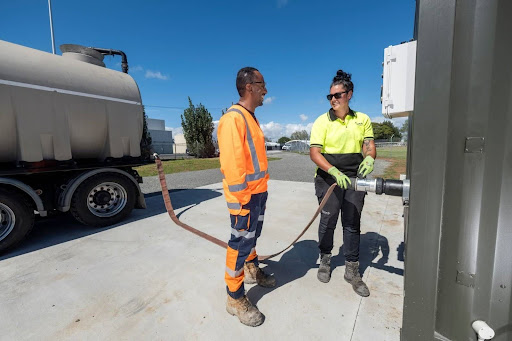
On-site unloading conditions matter. Limited hardstand space, restricted manoeuvring room, or shared access areas extend discharge times and reduce overall delivery capacity. These delays compound across the day, affecting subsequent deliveries.
When turnaround time is ignored during planning, schedules that look efficient on paper fail under real-world conditions.
Compliance Pressures Rarely Announce Themselves
Environmental handling requirements, runoff control, and discharge management are often addressed late in the process, even though they directly affect how water can be delivered and stored.
Government guidance from bodies such as the Ministry for the Environment makes it clear that water handling must be planned, not improvised. When compliance is integrated early, supply remains invisible. When it is not, it becomes a source of friction.
Why Local Experience Reduces Disruption
Reliable water supply in Auckland depends on anticipating constraints rather than reacting to them. Providers with local knowledge understand how access, timing, and demand interact under pressure.
Projects that work with experienced operators like Essential Bulk Liquid tend to encounter fewer disruptions because water planning is treated as a system, not a delivery task.
What Well-Prepared Sites Do Differently
Sites that maintain consistent water access usually:
- Model peak demand instead of averages
- Size storage to handle delivery variability
- Validate access and turnaround conditions early
- Embed compliance requirements from the outset
These steps rarely draw attention, but they prevent the failures that do.
Final Thoughts
Water tanker disruption in Auckland is rarely accidental. It is the predictable result of small planning oversights that compound under urban pressure. When water supply is planned as a critical system, those oversights disappear.
Good planning does not make water delivery noticeable. It makes it reliable. And in Auckland, reliability is what keeps projects moving.